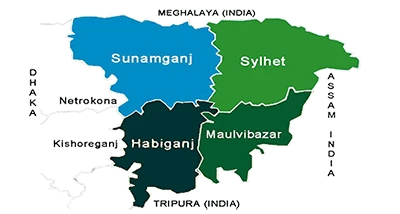
Nestled in the northeastern part of Bangladesh, Sylhet is a region of breathtaking natural beauty, rich culture and warm hospitality. Known as the “Land of Tea, Hills, and Rivers”, Sylhet captivates visitors with its rolling tea gardens, crystal-clear rivers, lush green forests and scenic valleys.
Sylhet is a land of breathtaking landscapes and serene natural beauty. From the mystical Ratargul Swamp Forest, often called the “Amazon of Bangladesh”, to the picturesque hills and tea gardens of Sreemangal, every corner offers a unique charm. The crystal-clear waters of Lalakhal and Sadapathor create mesmerizing views that captivate every visitor. Meanwhile, Jaflong, with its rolling hills, waterfalls and the Dawki River flowing from India, remains one of the most iconic destinations in the region. For those seeking true tranquility, Tanguar Haor offers an unforgettable experience — a vast wetland rich in biodiversity and migratory birds, where the beauty of nature meets the calm of the water. Malnicherra/Malnichora Tea Garden is one of Sylhet’s most enchanting tea estates, known for its lush greenery, rolling hills and serene atmosphere. Established during the British colonial period, it stands as one of the oldest and most historically rich tea gardens in Bangladesh.
Beyond its landscapes, Sylhet holds deep cultural and spiritual significance. It is the resting place of Hazrat Shah Jalal (R) and Hazrat Shah Paran (R), attracting thousands of pilgrims every year. Whether you seek relaxation, exploration or spiritual peace, Sylhet offers an unforgettable experience for every traveler.
Blessed with emerald hills, crystal-clear rivers and endless tea gardens, Sylhet stands as one of the most enchanting regions of Bangladesh. Its landscape paints a breathtaking canvas of lush greenery, mist-covered valleys and tranquil waters, making it a true paradise for nature lovers.
From the blue waters of Lalakhal and the rocky rivers of Jaflong to the mystical Ratargul Swamp Forest and serene Sadapathor, every corner of Sylhet reveals a unique charm and natural wonder. The rhythmic flow of rivers, the chirping of birds and the cool mountain breeze create a soothing environment that refreshes the mind and soul.
Beyond its scenic splendor, Sylhet also captivates visitors with its spiritual heritage, traditional hospitality and vibrant local culture. Whether you’re exploring the tea estates of Sreemangal, boating across Tanguar Haor or simply watching the sunset over the hills, the beauty of Sylhet will leave an unforgettable mark on your heart.
People love visiting Sylhet for its rare combination of natural beauty, cultural richness, and warm hospitality. Surrounded by lush green hills, rivers, waterfalls, and tea gardens, Sylhet offers a refreshing escape from city life. Visitors are drawn to its unique destinations such as Ratargul Swamp Forest, Jaflong, Lalakhal, Sadapathor, Sreemangal and Tanguar Haor, each offering breathtaking scenery and peaceful experiences.
Beyond nature, Sylhet is also known for its spiritual and historical heritage including the sacred shrines of Hazrat Shah Jalal (R) and Hazrat Shah Paran (R) which attract thousands of visitors every year. Combined with friendly local people, delicious cuisine, and well-organized tourist services, Sylhet truly captures both the heart and soul of every traveler.
Other notable attractions in Sylhet include the Hazrat Shahjalal and Shah Paran Mazar, Sylhet International Stadium, Agun Pahar, Keane Bridge, Ali Amjad’s Clock Tower, Tamabil Border, Zakaria City, Shahjalal University, Tilagor Eco Park, Adventure World, Baikka Beel (Wetland Sanctuary), Lemon Garden and Dreamland Park.
Sylhet is a very old city that has a history of a thousand years. Jaintapur, a part of Sylhet district, is a historically rich area where you can visit Lalakhal , Sreepur Tea Garden and a part of Jaflong. Nagari Lipi (Letter) is the brightest document of Sylhet's unique cultural heritage. The Cuisine, language, literature, songs, traditions, etc. have been reflected in Sylheti culture. Apart from Sylhet, people of Manipuri, Patra, Khasia, Chakma, Tripura, and Santal ethnic groups live in Sylhet. As a result, the language, history, heritage and culture of this region are very diverse and rich. The influence of the Assam language of India and the culture of Sylhet is remarkable as it was formerly a part of the state of Assam. It is said that after the Brahmo War, Manipuris came to Sreehatta and Kachar area and worshiped God and performed a dance called Lai. Which is included in the ancient culture of this region. Later, with the emergence of other colonialists including Arabs, Turks, Persians and Aryans, dialectal Sanskrit merged with the ancient culture.
Hazrat Shahjalal (RH) and Hazrat Shahporar (RH) were very influential in spreading Islam in Sylhet. Sylhet is revered as a holy place because of the 260 Awliya (Guardian, Patron, Companion ) who are buried here.The official currency of Sylhet is the Bangladeshi Taka (BDT), as the region is one of the administrative divisions of Bangladesh. Visitors will find ATMs widely available throughout the city, and major credit cards are generally accepted by hotels, restaurants, and other service providers.
For convenience, it is recommended to carry some cash in local currency when traveling to remote or rural tourist areas where digital payment facilities may be limited.

Do you have any queries? we would love to hear from you, so please ask your question here
 Bangladesh