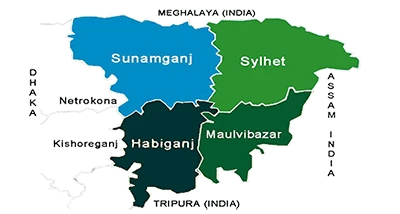
Hakaluki Haor is located in the north-eastern part of Bangladesh, spreading across Barlekha, Juri and Kulaura Upazila of Moulvibazar District, and Fenchuganj, Golapganj and Beanibazar Upazila of Sylhet District. It is one of the largest freshwater wetlands in South Asia and is made up of a huge network of interconnected beels (lakes), canals and low-lying farmland. The Kushiyara River and its channels feed the Haor, which is why the landscape changes so dramatically from season to season.
The Haor covers roughly 18,000 hectares and includes around 190 beels, with many villages scattered along its edges and on raised mounds inside it. During the monsoon, most of the land goes under water and the whole area turns into a vast inland sea. In the dry season, many beels shrink and the land is used for fishing and farming. Hundreds of thousands of people depend on the Haor for their livelihoods. It is rich in fish, aquatic plants, amphibians, reptiles and birds, and every winter large numbers of migratory birds arrive here. The Bangladesh Government declared Hakaluki Haor an Ecologically Critical Area in 1999 to protect its wildlife and natural resources from over-exploitation.
Why Hakaluki Haor is popular
Hakaluki Haor is popular because of its sheer size, its rich wildlife and the peaceful, authentic village and boat experience it offers away from the crowded tourist spots.Breathtaking Scenic Beauty
During the monsoon season, Hakaluki Haor turns into an endless sheet of water dotted with green patches, small islands and swaying water plants.- Floating Experience: Tourists rent traditional wooden boats for day trips or longer journeys, gliding through wide beels and narrow canals and enjoying open skies in every direction.
- Sunrise & Sunset: The wide open water makes the Haor one of the best places in Sylhet region to watch golden sunrises and sunsets and to take photographs.
- Swamp Forest: Patches of water-tolerant trees such as Hijol and Koroch stand partly submerged during the rainy season, creating a unique and picturesque scene.
Ecological Significance (Ecologically Critical Area)
Hakaluki Haor's importance for nature is a major draw for eco-tourists, birdwatchers and researchers.- Ecologically Critical Area: It was declared an Ecologically Critical Area in 1999, recognizing its value as a wetland and its need for protection.
- Bird Sanctuary: The Haor is an important winter home for migratory waterfowl as well as many resident birds, attracting birdwatchers and photographers from across the country.
- Bio-diversity Hub: It supports a large variety of freshwater fish and many species of aquatic plants, amphibians and reptiles, and is an important fish breeding ground.
Immersive Travel Experience
The travel experience here is quiet and local, offering a blend of adventure, nature and rural life.- Boat Exploration: Boat is the main way to explore the Haor. You can cruise across the beels, visit floating fishing spots and stop at small villages along the water.
- Local Culture: Visitors can see the traditional life of fishing and farming communities whose daily work follows the rise and fall of the water.
- Seasonal Contrast: The Haor offers two distinct experiences: the wide, water-filled look during the monsoon (best for boat cruising) and the lively bird season with green fields and shrinking beels in winter (best for birdwatching).
Best Time to Visit Hakaluki Haor
If you want the real Hakaluki Haor experience, timing matters a lot. Here’s the simple breakdown.Best time overall: June to October
This is when the Haor fills with water and becomes a huge, calm lake surrounded by green villages and open sky. Boat trips, photography and the full "Haor vibe" are at their peak.
If you want to see migratory birds: December to February
Winter birds gather across the beels and wetlands. The scenery changes completely: quiet, calm and full of wildlife.
Check out the complete package details including vehicle, hotel stays & guide - View Package Rates